
The short answer: pack in layers built around a few versatile, neutral pieces, bring a plug adapter (France runs on 230V with Type C/E outlets), and prioritize one genuinely comfortable pair of shoes over three cute pairs. Beyond that, what belongs in your suitcase depends entirely on where you're going and when — a June week on the Côte d'Azur and a December weekend in Strasbourg have almost nothing in common, packing-wise, and Normandy can throw four seasons at you in a single afternoon regardless of the calendar.
I've been packing for France, and packing clients for France, for longer than I'd like to admit. I studied Art History here, wore through more than one pair of shoes on the cobblestones around the Louvre, and have since traveled back to Provence, the Côte d'Azur, the Loire Valley, Bordeaux, and Burgundy enough times to know exactly where a "smart casual" wardrobe holds up and where it doesn't. The packing questions I get from clients are almost never about quantity — they're about mismatched expectations, the traveler who packs for Paris and then finds themselves shivering on a Normandy beach, or the one who over-packs sundresses for a trip that turns out to be mostly Alsatian Christmas markets. This guide sorts that out region by region and season by season.
What Clothes Should I Pack for France?
Build around a small capsule of neutral, well-fitting pieces you can layer and re-wear: dark jeans or tailored trousers, a couple of long-sleeve tops, a sweater, a blazer or structured jacket, and one dressier outfit for a nicer dinner. French style, as most travel guides on the subject will tell you, leans toward polished neutrals — black, navy, gray, camel — rather than the bright colors, logos, and athletic wear common among American tourists. A round-up on dressing for France put it plainly: dressing up a bit for everyday errands is normal here, and the goal isn't fashion, it's looking intentional rather than like you just left the gym.
That doesn't mean packing anything uncomfortable. It means swapping the branded hoodie for a well-cut sweater and the running shoes for a leather or minimalist sneaker, then layering with a scarf, which does double duty as an accessory and a way to cover bare shoulders at a church. I tell clients: if you'd feel slightly overdressed walking into a café at home, you're about right for a café in Paris.
Do I Need a Plug Adapter for France?
Yes. France runs on 230V at 50Hz through Type C or Type E outlets, both round two-pin styles that are entirely different from the flat two-prong plugs used in the US, so a plug adapter is non-negotiable — nothing American will physically fit a French socket without one. The good news is that most of what you're actually charging doesn't need more than that. Phone chargers, laptop chargers, and camera batteries are almost universally "dual voltage" these days; check the fine print on the charger brick itself, and if it lists an input range like 100-240V, 50/60Hz, a simple adapter is all you need.
Where it gets trickier is higher-wattage appliances — hair dryers, flat irons, and travel kettles in particular. Those often run on a single voltage and can be damaged (or become a small fire hazard) if plugged into 230V through an adapter alone; they genuinely need a voltage converter, or the honest simpler fix, which is what I usually recommend: leave it home and either use what your hotel provides or buy a cheap one locally. Most three- and four-star hotels in France supply a hair dryer in the room, and it's one less thing to pack and one less thing that can go wrong.
What Should I Pack for Paris in Spring?
Paris in April and May runs roughly 45-65°F (7-18°C), with warm afternoons, genuinely cool mornings and evenings, and rain that shows up without much warning. Layering is everything: a long-sleeve top or light sweater under a jacket you can shed by early afternoon, plus a packable rain layer or umbrella you keep in your bag rather than your hotel room. This is also the season I get the most questions about the best time to visit France in the first place, and spring's mix of mild days and cool nights is exactly why layers beat any single "spring outfit."
Cobblestones and centuries-old stone stairs are a constant during a week in Paris, so this is not the season for anything with a slick or overly stiff sole. Save the delicate flats for dinner and walk the Marais and Montmartre in something with real cushioning underneath.
What Should I Pack for the French Riviera in Summer vs. Alsace at Christmas?
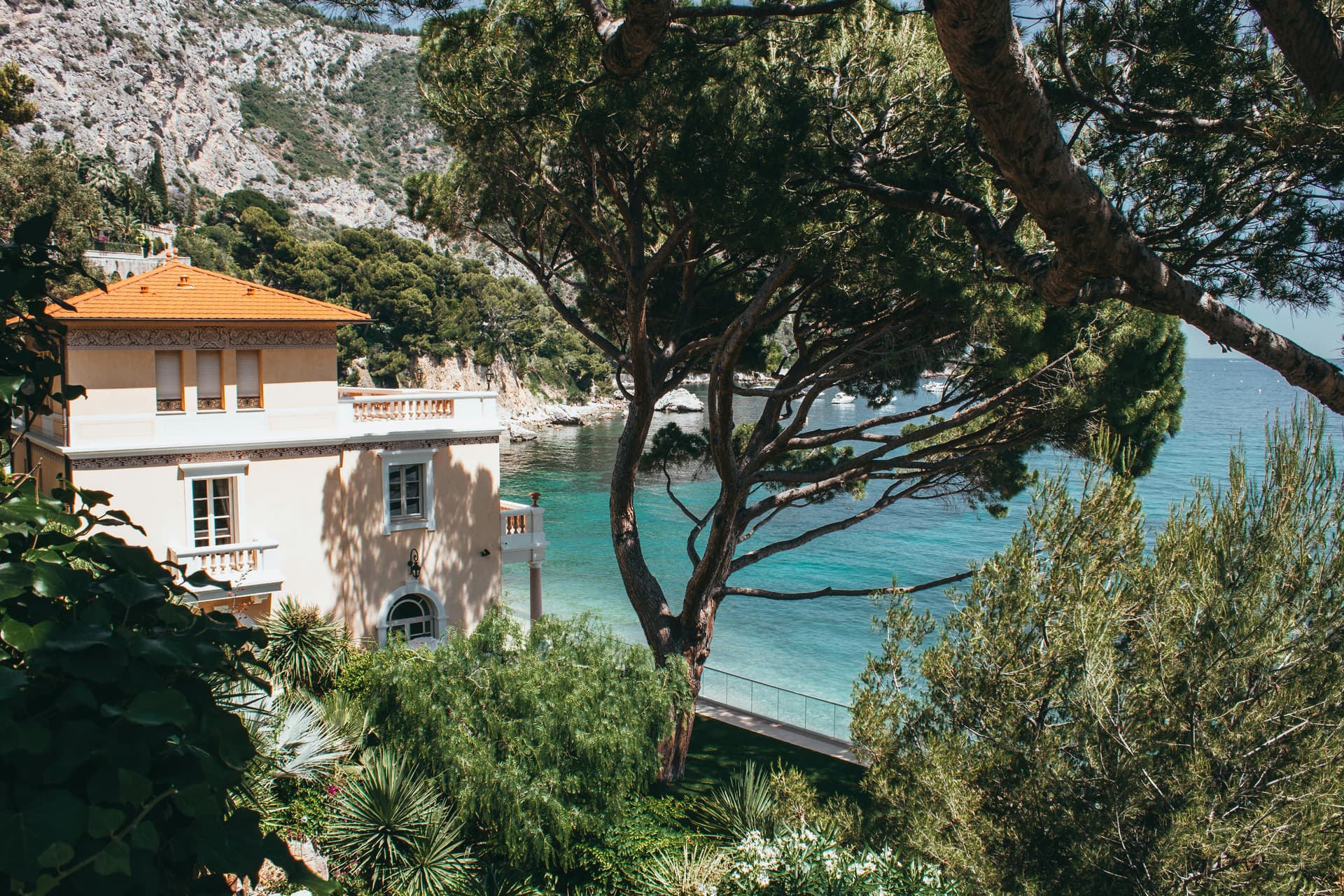
These two trips could not look more different in a suitcase. The French Riviera in July and August runs warm and dry, with highs commonly in the mid-to-upper 70s and low 80s°F (around 25-29°C) and comfortably warm evenings — think linen shirts, breathable dresses, a swimsuit and cover-up if you're based anywhere near Cannes or Antibes, sandals for the boardwalk, and one slightly dressier outfit for a harbor-side dinner in Nice or Saint-Tropez. Sun protection matters more here than almost anywhere else in France — a hat and real sunscreen, not an afterthought.
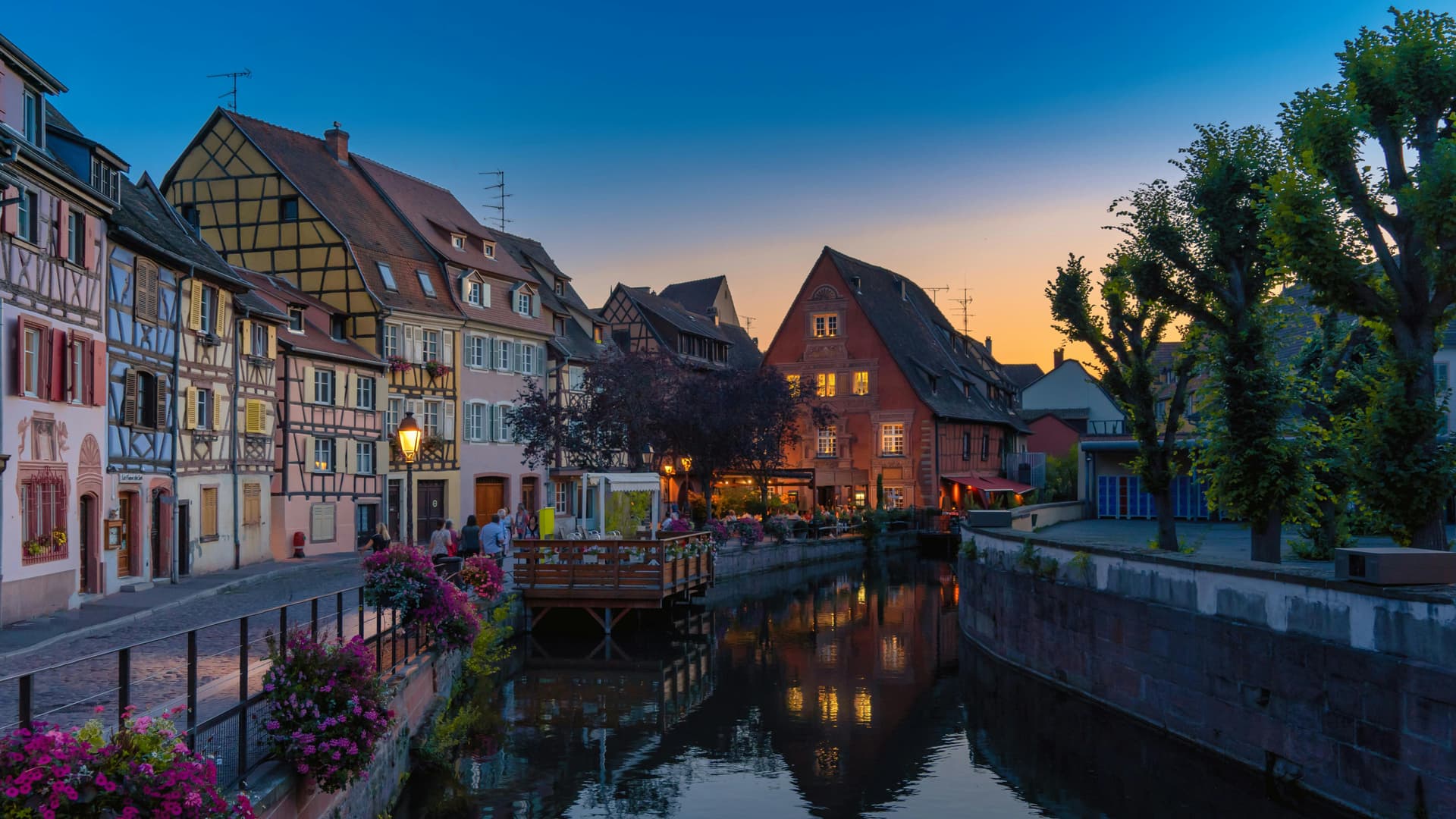
Alsace in December is the opposite problem entirely. Average highs hover around 41-45°F (5-7°C) with overnight lows regularly dropping near or below freezing, and snow is a real possibility even if it isn't guaranteed every year. For the Alsace Christmas markets, I tell clients to dress the way they would for a cold football game: a proper insulated coat, a warm hat, gloves, a scarf, thermal layers under your sweater, and boots with real tread, since market cobblestones get slick with the cold and foot traffic. A stylish wool coat photographs beautifully in Colmar and Strasbourg, but it needs real insulation underneath it, not just good looks.
What Should I Pack for Provence and the Loire Valley?
Provence runs warm and dry for most of the travel season — expect summer highs in the mid-80s°F (around 28-30°C) with very little rain, cooling to a genuinely pleasant 65-75°F (18-24°C) in late spring and early fall, which is when I send most clients chasing lavender season or a slower few days around Saint-Rémy. Pack light natural fabrics, a sun hat, and comfortable sandals or walking shoes for market mornings in hill towns where the streets are uneven stone.
The Loire Valley runs several degrees cooler than Provence in every season and sees rain more evenly spread through the year, so a light layer and a compact umbrella earn their space in the bag even in summer. Château visits also call for a bit more polish than a vineyard tasting room — smart-casual layers photograph better against Renaissance stonework than shorts and a T-shirt, and many château interiors are cooler than the courtyards outside them.
What Should I Pack for Normandy's Changeable Coastal Weather?
Normandy is the region where I tell clients to stop checking the ten-day forecast and just pack for all four seasons at once. The coastline is genuinely famous for weather that turns within the same afternoon — sun, wind, and a passing shower can all show up before lunch, regardless of the month. A Normandy trip from Paris, whether it's the D-Day beaches, Mont-Saint-Michel, or Rouen's cathedral quarter, calls for a warm layer, a genuinely waterproof (not just water-resistant) outer shell, and a compact umbrella you actually carry rather than leave in the hotel.
Footwear matters even more here. Bluffs, tidal flats, and uneven medieval streets are common across the region, so this is not the trip for anything without real grip and support — a supportive, weatherproof walking shoe beats sandals or thin-soled sneakers every time Normandy is on the itinerary.
What Shoes Are Best for Walking in France?
One well-broken-in pair of shoes will do more for your trip than any other single packing decision. French old towns, from the Marais to Rouen to Aix-en-Provence, are built on cobblestone and centuries-old stone that punishes flimsy soles and unsupportive flats within a day or two. Travel-shoe guides consistently point to the same features: real cushioning to absorb the unevenness, a flexible-but-supportive sole, a grippy rubber outsole for stone that gets slick in rain, and a lace-up fit that keeps your foot secure rather than sliding inside a slip-on.
I tell clients to bring one pair that checks those boxes and looks presentable enough for a nice dinner — a clean leather or minimalist sneaker does this well and won't read as a "tourist shoe" the way a chunky running trainer can. Save a second, dressier pair for evenings out and skip flip-flops entirely outside the beach; they're viewed as too casual for anywhere else in France, cobblestones or not.
Do French Churches and Cathedrals Have a Dress Code?
Yes, and it's worth planning for rather than discovering at the door. Notre-Dame in Paris requires shoulders and knees covered — sleeveless tops, crop tops, and shorts above the knee are turned away at the entrance, and men are asked to remove hats indoors. Chartres and other working cathedrals generally follow the same unwritten standard, since they remain active places of worship, not museums. Mont-Saint-Michel's abbey is more relaxed but still asks for modest dress out of respect for the site's religious history, particularly in the abbey church itself.
The fix is simple and works everywhere: keep a lightweight scarf or pashmina in your daybag all trip long. It solves a bare-shoulder problem in about three seconds, layers over a sundress on a cool evening, and takes up almost no space in your suitcase.
What Else Should I Pack for a France Trip?
A few smaller items solve problems clients run into more than they'd expect. A crossbody bag or day pack that zips closed is worth it in crowded spots like the Louvre queue or the Métro. A refillable water bottle earns its keep on long museum or château days. And if your itinerary includes train travel between regions, pack a layer you can add or remove easily — stations and platforms run cooler than the train cars themselves, and you'll want to adjust quickly rather than dig through a suitcase.
Beyond the physical packing list, the bigger question I usually get from clients is less "what do I bring" and more "how do I build an itinerary where the weather actually cooperates." That's a planning question, not a packing one, and it's exactly what I help with when I put together a custom itinerary — matching your regions and season so your suitcase, and your trip, both make sense together.
FAQ
Do I need a voltage converter for France, or just a plug adapter?
For most travelers, a plug adapter alone is enough, since phone chargers, laptop chargers, and camera batteries are typically dual-voltage and handle 230V without issue — check for "100-240V" printed on the charger. Higher-wattage devices like hair dryers or flat irons often need a real voltage converter, or you can simply use what your hotel provides and skip packing them altogether.
What should I pack differently for the French Riviera versus Alsace?
The Riviera in summer calls for light linens, sandals, and sun protection, with highs commonly in the upper 70s to low 80s°F. Alsace in December is the opposite: an insulated coat, thermal layers, gloves, and boots with real tread, since highs hover in the low-to-mid 40s°F with overnight temperatures near or below freezing and possible snow around the Christmas markets.
What shoes should I bring for walking on French cobblestones?
Bring one well-broken-in pair with real cushioning, a flexible but supportive sole, and a grippy rubber outsole, since cobblestones get slick in the rain. A clean leather or minimalist sneaker works well for both daytime walking and a casual dinner, while flip-flops and thin-soled sandals are best left for the beach.
Do Notre-Dame and other French cathedrals have a dress code?
Yes. Notre-Dame requires shoulders and knees covered, turning away sleeveless tops, crop tops, and above-the-knee shorts at the entrance, and asks men to remove hats indoors. Other working cathedrals like Chartres generally follow similar modest-dress expectations. A lightweight scarf solves the shoulder-coverage problem quickly and is worth carrying on any sightseeing day.
Why does Normandy need different packing than the rest of France?
Normandy's coastal weather is known for shifting within a single afternoon, cycling through sun, wind, and rain regardless of season or forecast. A warm layer, a genuinely waterproof outer shell, a compact umbrella, and supportive weatherproof shoes matter more there than almost anywhere else in France, including in the warmer months.