
A family trip to France works best when you plan for roughly half the sightseeing you would attempt as a couple, choose one or two regions instead of racing across the country, and build real downtime into every single day. Paris pairs naturally with a slower-paced region like the Loire Valley or Provence, giving kids gardens, pools, and open space to counterbalance museum mornings. Go in expecting that some afternoons will be spent at a playground instead of a château, and the trip will actually deliver what you are hoping for: kids who remember France fondly rather than kids who associate it with exhaustion.
I'm Tamar Miller, founder of France Awaits Travel, and family itineraries are some of my favorite ones to design, precisely because they force real discipline. I've built trips for grandparents traveling with grandchildren, for families juggling a toddler and a teenager on the same itinerary, and for first-timers nervous about a transatlantic flight with a six-year-old. The France that works for families is the same country I fell in love with studying art history in front of the Winged Victory of Samothrace — it just needs a gentler rhythm than the trip you would plan for yourselves alone.
Is France a Good Destination for Families with Kids?
Yes, and more so than many parents expect. France's cities are full of genuinely excellent public parks (not just monuments), its food culture includes plenty of things kids already like (bread, cheese, crepes, pastries), and its train network makes it easy to move between a city and the countryside without a rental car. The country's castles, in particular, read like real-life fairy tales to a seven- or eight-year-old in a way that a museum full of paintings sometimes does not.
The regions that work best for families combine one unmissable "big city" stop with a slower, greener second stop. Paris supplies the wow factor and the world-class attractions; a region like the Loire Valley or Provence supplies pool time, market mornings, and space to run around. I rarely recommend a family itinerary that tries to cover more than two regions in under ten days — the transitions themselves are tiring for kids, and every additional hotel checkout eats into actual vacation time.
How Many Sights Should We Plan Per Day with Kids?
Plan on one major activity per day, not three. Family-travel researchers and pediatric travel guides consistently point to the same idea: kids need unstructured downtime built into the schedule, not squeezed in as an afterthought, because it prevents the overstimulation that turns into meltdowns by late afternoon. In practice, that means a museum or château in the morning, then a park, hotel pool, or simply unscheduled wandering in the afternoon, rather than a second timed attraction.
I tell clients to pick one "anchor" experience per day and let everything else stay flexible. If you are in Paris, that might be the Louvre in the morning and the Luxembourg Gardens in the afternoon rather than the Louvre followed by the Musée d'Orsay. The itinerary that looks slightly underscheduled on paper is usually the one that actually works once you are traveling with an eight-year-old who is done being upright by 3pm.
What Documents Do My Kids Need to Travel to France?
Every child needs their own valid US passport — there is no way around this, even for infants. Passports issued to children under 16 are only valid for five years rather than the standard ten, so check expiration dates carefully if you are reusing a passport from a previous trip. Both parents are generally involved in a minor's passport application, and all minors under 18 must apply for a first-time or renewal passport in person.
If your child is traveling with only one parent, or with a grandparent or other adult, US Customs and Border Protection recommends carrying a notarized letter of consent from the parent who is not traveling, stating that the child has permission to travel abroad with the accompanying adult. It is not always checked, but immigration officials on either end can ask for it, and not having it when asked is a genuinely bad way to start a vacation. I have every family client with a single-parent or grandparent itinerary carry this letter as a matter of course.
How Do We Handle Jet Lag with Kids?
Give it more time than you think, and do not hide from daylight. A commonly cited rule of thumb is roughly a day of adjustment for every time zone crossed, though most kids settle into local time within three to five days if you help the process along. The two things that actually move the needle are getting outside into natural light soon after arrival and sticking to local meal and sleep times from day one, rather than letting an exhausted kid nap for four hours at 2pm and stay up until midnight.
I build the first full day in France as the lightest day of the entire itinerary — a walk, a park, an early dinner, bed at a reasonable local hour. Trying to hit the Eiffel Tower and the Louvre on the same afternoon you land is a mistake I see even experienced traveling parents make, and it usually costs you the second day too.
Which French Regions Work Best for Families?
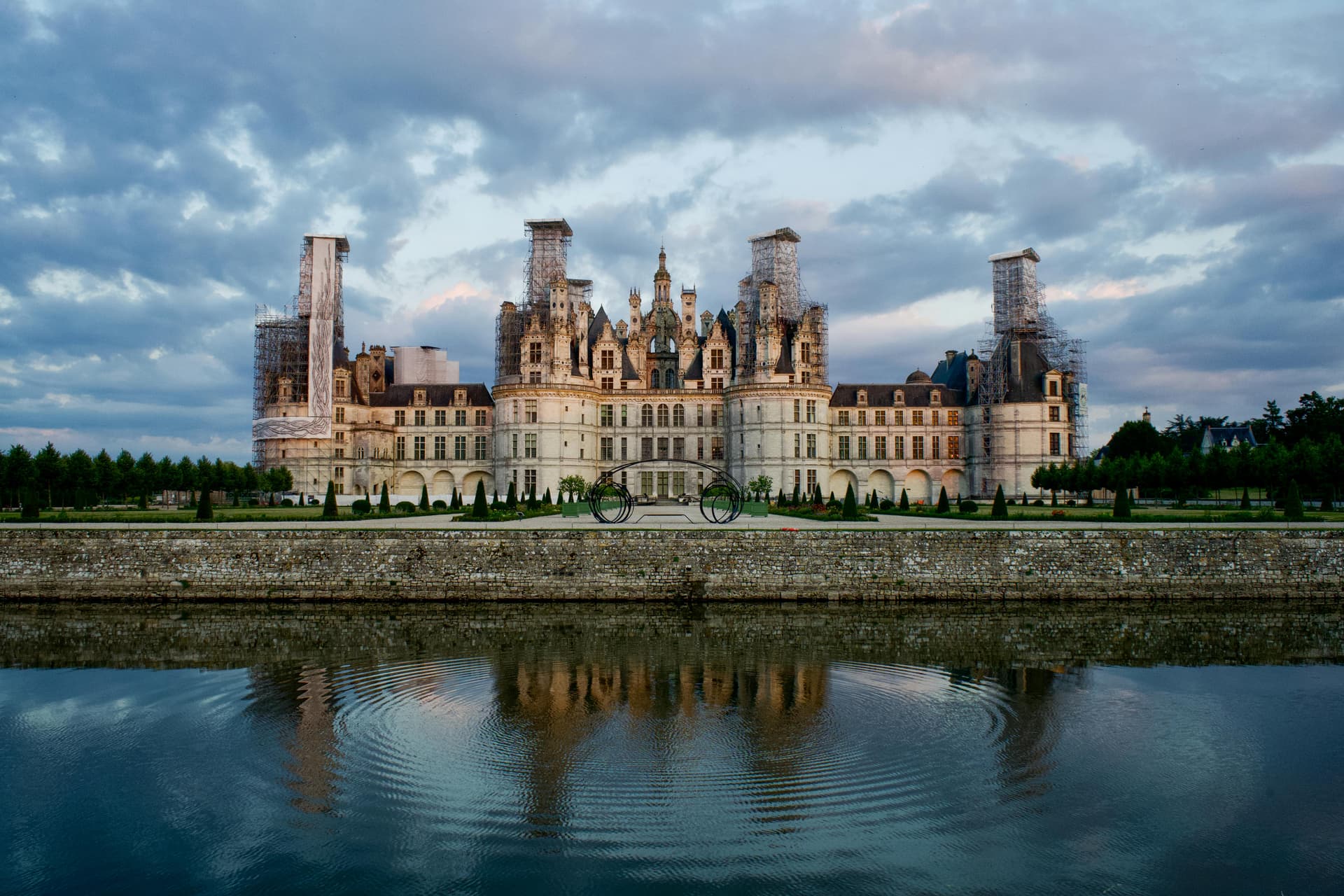
Paris paired with the Loire Valley is my most common family recommendation for first-timers. The châteaux genuinely delight kids — moats, turrets, and in some cases actual gardens to run through at Villandry — and hotels in the region tend to have more space and often a pool. Provence works beautifully for families who want a slower week: village markets, lavender season if your dates align, and short drives instead of long train transfers. The French Riviera adds real beach time to the mix, which is worth a lot with younger kids who need a day where the "activity" is simply swimming.
Normandy and Burgundy can both work for families with older kids or a genuine interest in history, but I use them more selectively — the D-Day beaches carry real emotional weight that is often lost on children under ten or eleven, and Burgundy and Bordeaux lean toward a wine-focused pace that is more rewarding once kids are teenagers. None of that rules these regions out; it just changes how I'd sequence them into a family itinerary.
Is Disneyland Paris Worth a Day Trip?
For families with kids roughly age three to eleven, yes, and it is more accessible from central Paris than most parents expect. The RER A regional train runs directly from several central Paris stations — Châtelet-Les-Halles, Gare de Lyon, Nation, Auber, and Charles de Gaulle-Étoile — to Marne-la-Vallée/Chessy, the station a two-minute walk from the park entrance. Travel time runs roughly 35 to 40 minutes depending on which station you board at, and trains run about every 15 minutes throughout the day. The park itself sits around 20 miles outside the city center.
Where I steer clients differently is the "day trip" framing. A single day at Disneyland Paris after a 40-minute train ride each way, with young kids, tends to feel rushed. If Disneyland Paris is a priority, I usually build in one night near the park so the day itself is not bookended by transit and exhaustion, and buy park tickets online in advance regardless of how many days you go.
What Are the Best Kid-Friendly Things to Do in Paris?
Beyond the obvious landmarks, Paris has several attractions genuinely built with kids in mind. The Cité des Sciences et de l'Industrie at Parc de la Villette is Europe's largest science museum and skews toward hands-on exhibits for roughly ages three to twelve, with a planetarium, an aquarium, and an IMAX theater in the striking spherical Géode building next door. The Grande Galerie de l'Évolution at the Natural History Museum draws even reluctant museum-goers with its central hall of roughly 7,000 animal specimens, from giraffes to elephants, arranged as if mid-migration.
The Luxembourg Gardens deserve more credit than most first-time visitors give them. Beyond simply being a beautiful place to sit, the gardens run a genuine puppet theater with shows most Wednesdays, Saturdays, and Sundays (and daily during French school holidays), pony rides on weekends and holidays, toy sailboats to rent for the fountain, a fenced playground, and the oldest carousel in Paris, dating to 1879. If you are already following a first week in Paris itinerary, this is where I tell families to trade an adult-paced afternoon for a kid-paced one.
How Do French Meal Times Work with Kids?
This trips up more American families than almost anything else on a France trip: French dinner service typically does not start until 7:30 or 8pm, and later still in the south, where 8 or 9pm is normal. Most restaurants simply are not serving dinner at 5:30 or 6pm the way an American family with young kids might expect, and showing up hungry and early to a closed dining room is a common frustration.
A few things I tell clients to build into the day: treat the French afternoon goûter, a snack around 4 or 4:30pm, as a legitimate strategy rather than something to feel guilty about — a pastry or crepe genuinely bridges the gap to a later dinner. Lean on boulangeries and casual cafés, which tend to serve food throughout the afternoon, for a lighter early meal if a full 8pm dinner is not realistic for younger kids. And when you do sit down for dinner, understanding a few basic French dining customs in advance makes the later hour feel like part of the experience rather than an inconvenience.
Planning Your Own Family Trip to France
None of this is complicated, but it does mean building a genuinely different itinerary than the one you would plan without kids — fewer sights, more margin, and regions chosen for pacing as much as for beauty. That is exactly the kind of planning I do for families every season, matching the itinerary to the actual ages and energy levels of the kids traveling, not a generic "top ten" list. If you would like help building a realistic, kid-paced France itinerary for your family, get in touch and tell me their ages and your dates — I will tell you honestly what pace and regions will actually work.
FAQ
Does every child need their own passport to travel to France?
Yes. Every child, including infants, needs their own valid US passport to travel to France — there is no exception for young children traveling on a parent's passport. Passports issued to minors under 16 are valid for five years instead of the standard ten, so double-check expiration dates if you are reusing one from an earlier trip.
Do I need a notarized letter if I'm traveling to France with my child and my spouse isn't coming?
You should carry one. US Customs and Border Protection recommends a notarized letter of consent from the parent who is not traveling, confirming the child has permission to travel abroad with you. It is not always requested, but immigration officials can ask for it on either end of the trip, so it is worth the ten minutes it takes to prepare.
How many days should a first family trip to France be?
Ten to twelve days works well for a first family trip, enough time for one city stop like Paris and one slower second region without rushing transitions. Shorter trips of six or seven days work better focused on a single region, since young kids handle fewer hotel changes and travel days far better than a packed, multi-city itinerary.
Is Disneyland Paris worth visiting with young kids?
Yes, especially for kids roughly age three to eleven. It sits about 35 to 40 minutes from central Paris via the RER A train, with trains running roughly every 15 minutes from several central stations. I generally recommend one overnight near the park rather than a rushed single-day trip, so the visit is not bookended by exhausting transit.
What is the biggest mistake parents make planning a France trip with kids?
Overscheduling. Parents plan the trip they would want without kids, then try to fit children into it, which leads to meltdowns by mid-afternoon. Building in real downtime, choosing fewer sights per day, and picking a slower second region alongside a city like Paris makes a far bigger difference than any single attraction choice.
Sources
- USAGov — International Travel Documents for Children
- Disneyland Paris — Getting to Disneyland Paris from Paris
- Familinparis — The Cité des Sciences, the Museum Where Children Are Kings
- Sortiraparis — Our Top 5 Family Activities at the Luxembourg Gardens
- Remitly — Meal Times in France: A Cultural Overview
- Salt and Wind — How to Help Kids with Jet Lag