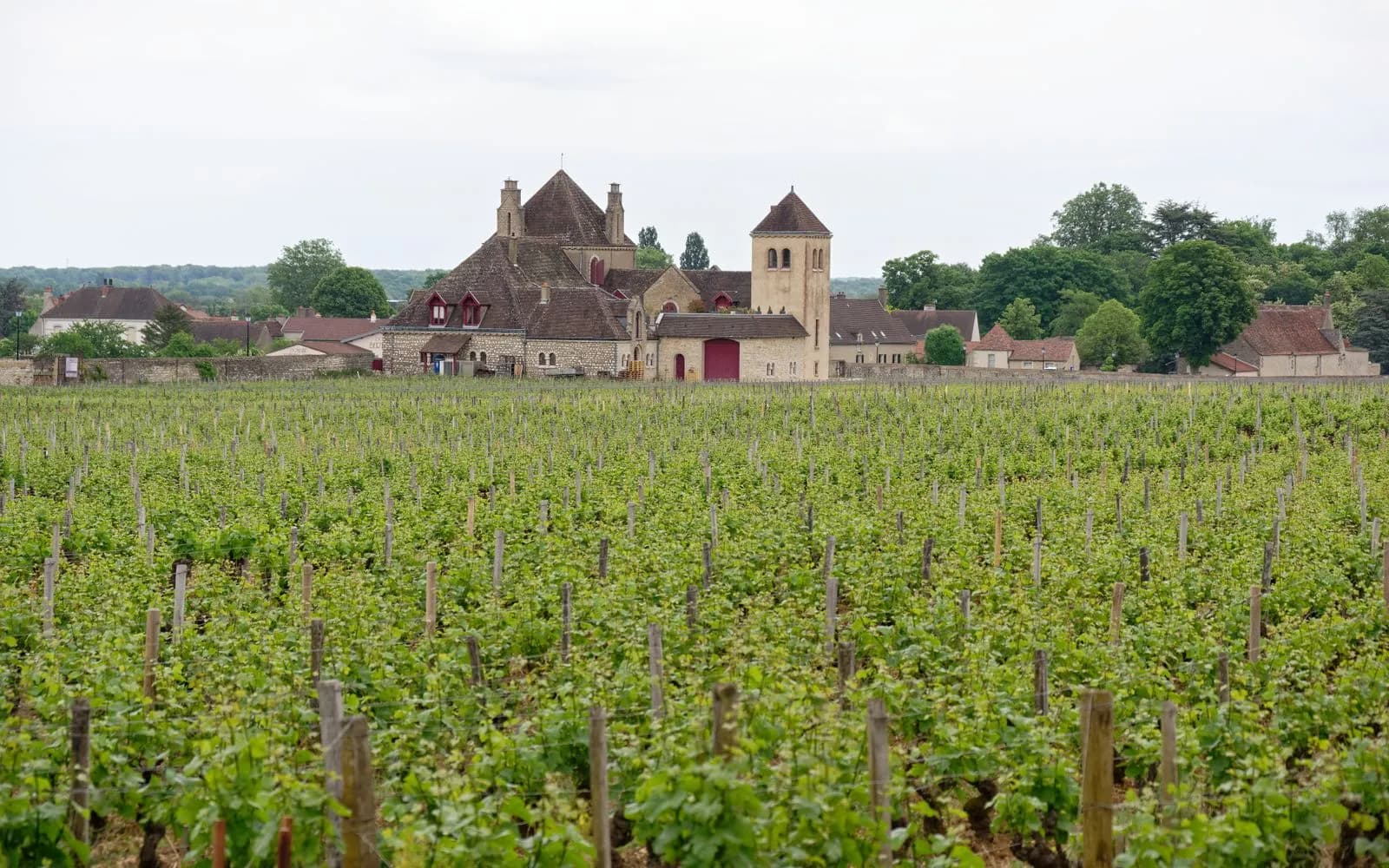

The best way to visit Burgundy wine country is to base yourself in Beaune for three or four nights, drive or cycle the short Route des Grands Crus between Dijon and Santenay, and book your domaine tastings well ahead. Burgundy is a region of small family estates rather than grand châteaux, so access is by appointment and the reward is conversation with the people who make the wine. Paris to Dijon takes under two hours by TGV, which makes it one of the easiest wine regions to reach from the capital.1
When I plan trips for clients at France Awaits Travel, Burgundy is often the region that surprises people most. It is quieter and more intimate than Bordeaux, and the whole famous strip of vineyards is small enough to understand in a couple of days.
Why is Beaune the best base for Burgundy wine country?
Beaune is a walled medieval town with a compact centre, excellent restaurants, and the vineyards starting at its edge. It sits roughly in the middle of the Côte d'Or, so the great villages to the north and south are each a short drive away. Dijon is better for city life, but Beaune is where the wine conversation happens.
The Hospices de Beaune and the Hôtel-Dieu
The Hôtel-Dieu, founded as a charitable hospital in the 15th century, is the postcard image of Burgundy, with its steep roof of glazed, patterned tiles. The Hospices still own vineyard parcels given by donors over the centuries, and their wines are sold each year at a charity auction. The official site lists opening hours of 9am to 7:30pm from April through mid-November, with shorter split hours from January to March, and the last entry is an hour before closing.2 Ticket prices on the official site were still labelled 2025 when I checked, so confirm the current rate before you go.
The Cité des Climats et Vins de Bourgogne
The Beaune branch of the Cité des Climats et Vins de Bourgogne is the best orientation in the region. It explains the idea of the climats, the individually named vineyard parcels that define Burgundy, through a guided visitor trail with a limited number of people per departure, so reserve in advance.3 I send first-timers here on the first morning, before any tasting, because everything afterwards makes more sense.
What is the Hospices de Beaune wine auction?
It is the most famous charity wine sale in the world, held on the third Sunday of November. The 166th sale takes place on Sunday 15 November 2026 in the Halles de Beaune, with wider festivities across the weekend of 13 to 15 November.45
The auction itself is aimed at professionals and registered buyers, so most visitors enjoy the atmosphere rather than the bidding: street tastings, open cellars, and a town full of winemakers. Book rooms and restaurants many months ahead if you want to be in Beaune that weekend, and expect higher prices. If crowds are not your preference, I would choose a different week, since the same wines are just as good in a quiet February.
What is the difference between the Côte de Nuits and the Côte de Beaune?
The Côte d'Or is a narrow limestone slope, and it divides into two halves. The Côte de Nuits is to the north, from Dijon down to Nuits-Saint-Georges, and is known mainly for powerful red Pinot Noir. The Côte de Beaune lies to the south and is celebrated for white Chardonnay as well as elegant reds. Together they form the heart of the climats recognised by UNESCO in 2015, a World Heritage cultural landscape covering 1,247 vineyard parcels.6
Côte de Nuits villages
- Gevrey-Chambertin: Structured, long-lived reds, and a handsome village with a small château worth a stop.
- Vosne-Romanée: Tiny and unshowy, yet home to some of the most sought-after reds in the world. The vineyards are the sight; the village itself is low-key.
- Vougeot: The Château du Clos de Vougeot was built by Cistercian monks and is now the seat of the Confrérie des Chevaliers du Tastevin. You can tour the old wine-making halls, though the standard visit is not a tasting.7
Côte de Beaune villages
- Pommard: Firm, serious reds, a short drive from Beaune.
- Meursault: Rich, nutty Chardonnay and a village square with several welcoming tasting rooms.
- Puligny-Montrachet: Precise, mineral whites, in a village that feels like a working farming community.
How do domaine tastings work in Burgundy?
Most Burgundy estates are small family operations, and the answer is almost always "by appointment." Write or call a few weeks ahead, in French if you can, and be on time. The most sought-after producers may not take visitors at all, which is why a planner with local relationships is genuinely useful here.8
A few points of etiquette I share with every client:
- Expect a cellar tasting, standing, with wine drawn from barrel. It is normal to spit, and the producer will point out where.
- Many domaines now charge a tasting fee, and it is polite to buy a bottle or two if you enjoyed the visit.
- Ask questions about the vintage and the specific climat in front of you rather than about scores or investment value.
- Do not stack more than two or three domaine visits in a day. The tastings are long, and quality of attention beats quantity.
If you prefer something walk-in friendly, there are larger houses in Beaune with self-guided cellar visits. For the broader French habits that help here, my guide to French food and dining etiquette covers greetings and pacing at the table.
What should you eat in Burgundy?
The food here is rich, rooted, and built around wine.
- Boeuf bourguignon: Beef braised in red wine, the dish that made the region's cooking famous.
- Escargots de Bourgogne: Snails baked in garlic and parsley butter, best eaten in a proper bistro.
- Gougères: Warm cheese puffs served with a first glass of wine.
- Époisses: A pungent, washed-rind cheese, to be eaten with a spoon and a sturdy red.
Lunch is the main event, and many restaurants close between services, so reserve both lunch and dinner. If you are weighing Burgundy against a city-focused trip, Michelin-starred dining in Paris is a good companion read, and many clients pair the two.
How do you get to Burgundy from Paris?
Take the TGV from Paris Gare de Lyon to Dijon, which aggregator timetables show at about 1 hour 37 minutes.1 Beaune itself is not a TGV stop, so the usual route is TGV to Dijon and a regional train on to Beaune, for a total of roughly two and a quarter to two and a half hours depending on the connection. Check SNCF Connect for exact times on your date.
For the vineyards themselves, a car with a driver is the most relaxed option for a luxury trip, because it removes the tasting-and-driving problem. My notes on French train travel cover booking and seat tips if you arrive by rail.
Cycling the Voie des Vignes
The Voie des Vignes is a cycle route running through the vineyards from Dijon to Santenay, roughly 67 to 72 km depending on the source, with the Beaune to Santenay stretch about 22 km.9 It can be covered in three easy stages, and electric bikes are widely available in Beaune. It suits couples who want to feel the slope of the vineyards without the logistics of a driver, ideally in spring or autumn.
What are the best add-ons: Dijon, Chablis and the Mâconnais?
Dijon
Dijon is an elegant city with a medieval core, and the Cité Internationale de la Gastronomie et du Vin, which opened in May 2022, is a useful rainy-day stop about a kilometre from the station.10 It has exhibition spaces and a wine bar pouring a large daily selection by the glass. Check the official site for current opening times before you plan around it.
Chablis and the Mâconnais
Chablis, to the northwest, makes crisp, mineral Chardonnay and is best treated as a long day trip or an overnight if you have a car. The Mâconnais, to the south, is softer and more relaxed, with generous whites and a less formal tasting culture. Both are easy to add if you have five or six nights, but they are separate drives rather than a quick detour from Beaune.
If you are building a larger wine itinerary across France, compare Burgundy with the Rhône Valley for a warmer, bolder style, and see our overview of Burgundy as a destination. Readers planning Italy as well may like our sister site's Valpolicella wine country guide.
How many nights do you need, and when should you go?
- Two nights: Enough for Beaune, the Hôtel-Dieu, and one day of tastings on the Côte de Beaune.
- Three to four nights: The ideal length. You cover both Côtes, Clos de Vougeot, and a long lunch without rushing.
- Five to six nights: Adds Dijon, Chablis or the Mâconnais.
The harvest usually falls in September and gives the region a working, energetic feel, though some producers are too busy to receive visitors. Late spring and early autumn are the sweet spots for weather. Winter is quiet, with fewer tourists and more time with the winemakers, though some restaurants and shops close. November is dominated by the Hospices weekend.
Where to stay
For a luxury stay, the hotels most often listed at five-star level around Beaune include Hôtel Le Cep & Spa in the historic centre, Hostellerie de Levernois just outside town, and Maison 1896 in central Beaune.11 Star ratings and room counts vary between listing sites, so I verify each property before recommending it to a client.
Plan your Burgundy trip with Tamar
Burgundy rewards good introductions. If you would like a private itinerary with domaine appointments, a driver, and restaurant reservations arranged in advance, get in touch and we will plan it together.
Frequently Asked Questions
Can you visit Burgundy wineries without an appointment?
Rarely. Most domaines are small family estates and expect visitors to book ahead, often a few weeks in advance. A few larger houses in Beaune offer walk-in or self-guided visits if you have not planned in time.
When is the Hospices de Beaune wine auction in 2026?
The 166th auction is on Sunday 15 November 2026 in the Halles de Beaune, with festivities from 13 to 15 November. The sale is mainly for professionals and registered buyers, but visitors can enjoy the town's events. Book accommodation far in advance.
How long does it take to get from Paris to Beaune?
The TGV from Paris Gare de Lyon to Dijon takes about 1 hour 37 minutes. Beaune is not a TGV stop, so add a regional train, for roughly two and a quarter to two and a half hours in total.
How many days do you need in Burgundy?
Three to four nights in Beaune is ideal for both the Côte de Nuits and the Côte de Beaune. Add two more nights if you want Dijon, Chablis or the Mâconnais.
What is the difference between the Côte de Nuits and the Côte de Beaune?
The Côte de Nuits, to the north, is known for powerful red Pinot Noir. The Côte de Beaune, to the south, is celebrated for white Chardonnay as well as elegant reds.
References
- Rome2rio — "Paris to Beaune by train, bus or car" (2026). rome2rio.com/s/Paris/Beaune
- Hospices de Beaune — "When is the Hôtel-Dieu open?" (2026). booking-hoteldieu.hospices-de-beaune.com/faq.html
- Cité des Climats et Vins de Bourgogne — "Practical information" (2026). citeclimatsvins-bourgogne.com
- Sotheby's — "Hospices de Beaune, Beaune" (2026). sothebys.com/en/about/locations/beaune
- France.fr — "Wine Auction at Hospices de Beaune" (2026). france.fr/en/event/wine-auction-at-hospices-de-beaune
- UNESCO World Heritage Committee — "Climats, terroirs of Burgundy" (2015). whc.unesco.org/en/decisions/6373
- Destination Dijon — "Château du Clos de Vougeot" (2026). en.destinationdijon.com
- Jancis Robinson — "Visiting Burgundy: the ins and mainly outs" (2026). jancisrobinson.com
- Beaune Tourism — "Cycling: La Voie des Vignes" (2026). beaune-tourism.com
- Atout France — "Dijon's Cité de la Gastronomie et du Vin opens this May" (2022). us.media.france.fr/en/node/8972
- Sotheby's — "Hospices de Beaune hotels" (2026). sothebys.com/en/hospices-de-beaune-hotels