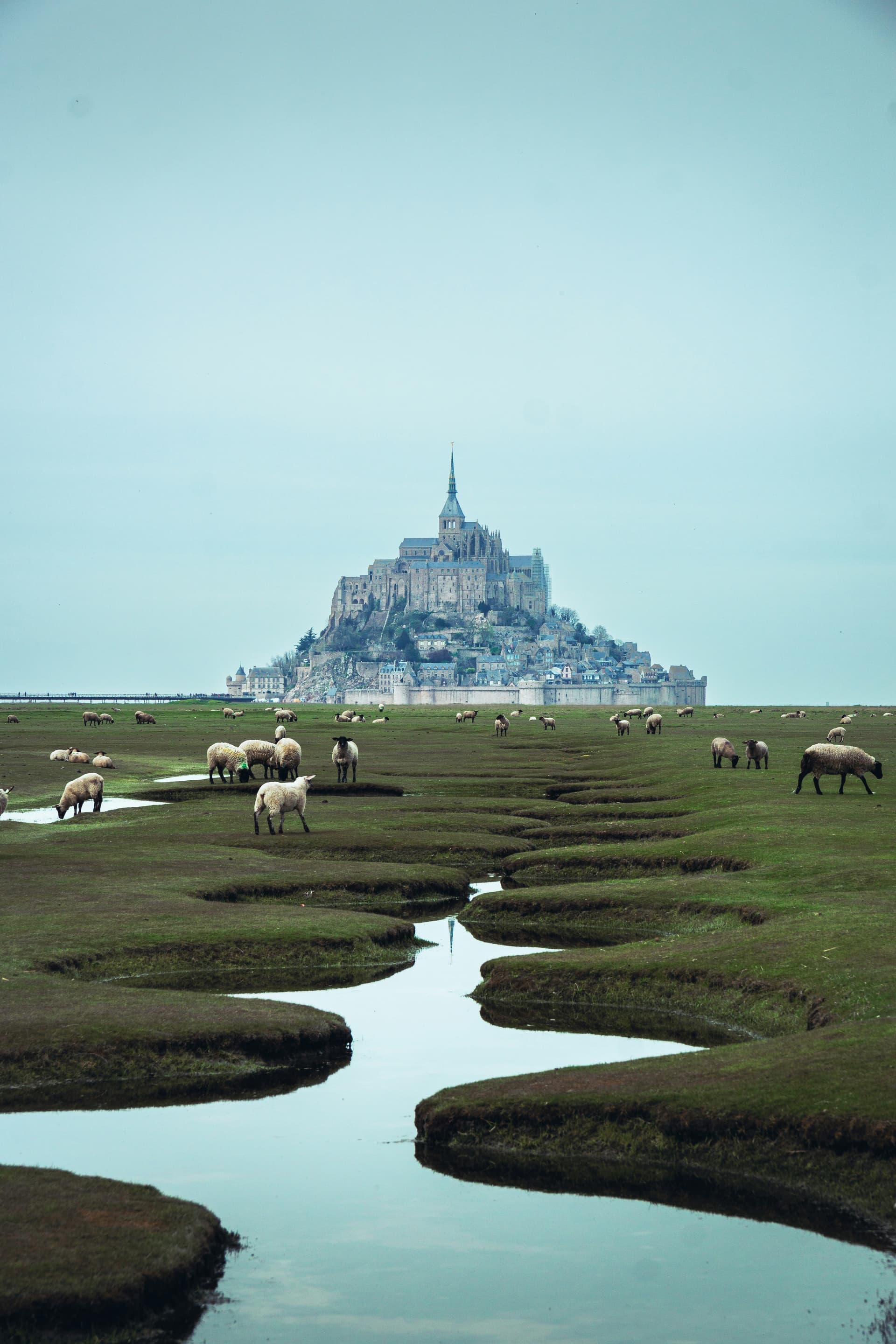

Mont-Saint-Michel exists in defiance of probability. A granite island rising from vast tidal flats, crowned by a medieval abbey that seems to grow organically from the rock — it's a sight that stopped pilgrims in their tracks a thousand years ago and continues to astonish visitors today.
This complete guide helps you plan a visit that does justice to one of Europe's most remarkable places, whether as a standalone trip or part of a broader Normandy itinerary.
Understanding the Tides
The bay around Mont-Saint-Michel experiences Europe's most extreme tides — the sea can recede 15 kilometers and return with legendary speed. These tides shaped the island's history and continue to influence visits today.
At high tide, water surrounds the island completely, recreating the experience of medieval pilgrims.
At low tide, the sand flats extend to the horizon, and guided walks across the bay become possible.
Check tide tables when planning your visit. The most dramatic high tides occur during spring tides (around new and full moons), when water surrounds the island completely and waves crash against the ramparts.
Getting There
By Car
Park in one of the mainland lots (parking is mandatory and costs €14.20 per day). From the parking area, free shuttle buses run continuously to the island, or you can walk the 2.5 km causeway on the dedicated pedestrian path.
By Public Transport
SNCF trains reach Pontorson (10 km away), with connecting buses to the island — see our French train travel tips for booking advice. From Paris, the journey takes about 3.5 hours with changes.
When to Arrive
Early morning (before 9 AM): Beat the crowds for the abbey and enjoy peaceful streets before the day-trippers arrive.
Evening (after 6 PM): Overnight visitors have the island largely to themselves as crowds depart.
Midday: Expect crowds, especially in summer. The main street (Grande Rue) becomes a slow-moving procession.
The Abbey
The Abbaye du Mont-Saint-Michel took centuries to build, with each era adding its own layer. The result spans Romanesque, Gothic, and later styles in a complex that seems to defy gravity.
What to See
The Marvel (La Merveille): The 13th-century masterpiece of Gothic architecture on the north side of the rock. Three floors of galleries, halls, and cloisters demonstrate medieval engineering at its finest.
The Cloisters: Double columns of pink granite create a space of exceptional beauty and serenity. The carved capitals repay careful study.
The Church: The Romanesque nave contrasts with the Flamboyant Gothic choir, rebuilt after the original collapsed. The spire reaches 157 meters above sea level.
The Crypt of Large Pillars: Massive columns support the church above, creating a space of overwhelming presence.
Visiting Practicalities
- Hours: Open daily except January 1, May 1, and December 25
- Tickets: Available online (recommended) or at the door
- Audio guides: Included with entry and essential for understanding what you're seeing
- Guided tours: Available in multiple languages at set times
- Allow: 2-3 hours for a complete visit
The Village
The tiny village below the abbey contains just a single main street (Grande Rue) lined with half-timbered houses that are now restaurants, hotels, and souvenir shops.
Worth Seeing
The Ramparts: Walk the path around the base of the island for dramatic views across the bay.
The Church of Saint-Pierre: This parish church served the village while the abbey served the monks. The cemetery behind contains remarkable old graves.
The Grande Rue: Touristy but atmospheric, especially early morning or evening when crowds thin.
Eating and Drinking
The island's restaurants serve massive omelettes, a local specialty since Mère Poulard began cooking them for pilgrims in the 1880s. They're theatrical but expensive — better lunch options exist on the mainland.
For a drink with a view, the restaurant terraces at the top of Grande Rue offer abbey views while you rest your legs.
Staying Overnight
Sleeping on the island transforms the experience. After day-trippers depart, the narrow streets empty and the floodlit abbey glows against the night sky.
Island Hotels
Several small hotels occupy historic buildings on the island. Expect:
- Atmospheric but simple rooms
- No car access (you'll carry your bags)
- Limited amenities
- Premium prices
- Magic after dark
Mainland Alternatives
Hotels near the parking area offer more comfortable accommodations at lower prices, with easy shuttle access to the island. You sacrifice evening atmosphere for practicality.
Bay Walks
Guided walks across the bay at low tide reveal a different perspective on Mont-Saint-Michel. Walking across the sand to reach the island — as pilgrims did for centuries — creates an unforgettable experience.
Important: Never walk the bay without a guide. Quicksand and rapid tides have claimed lives. The bay is genuinely dangerous.
Several companies offer guided crossings of various lengths, from short walks to full-day pilgrim routes. Book in advance during busy seasons.
Photography Tips
- Sunrise and sunset produce the most dramatic light
- The causeway provides classic straight-on views
- The ramparts offer abbey close-ups with bay in background
- The mainland near the parking area gives full-island perspectives
- Drones are prohibited — don't even think about it
Seasonal Considerations
Summer: Maximum crowds, longest hours, warmest weather. Book abbey tickets well ahead.
Spring/Fall: Better weather than you might expect, smaller crowds. Some services reduced.
Winter: Fewest visitors, dramatic weather, reduced hours. Hotels on island may close. Atmosphere can be incredibly atmospheric or just cold and wet.
Making the Most of Your Visit
The ideal Mont-Saint-Michel experience combines:
- Arrival in late afternoon — settling into island accommodation
- Evening exploration — empty streets, sunset views
- Next morning abbey visit — first entry before crowds
- Departure by noon — as day-trippers arrive
If visiting as a day trip, arrive early and explore the abbey first, then descend through the village as you work toward the exit.
Mont-Saint-Michel has attracted visitors for over a thousand years, and today pairs naturally with the nearby D-Day beaches for travelers exploring this corner of Normandy. With proper planning, your visit can capture some of the wonder those medieval pilgrims felt when they first glimpsed the abbey rising from the sea.
FAQ
How many days do you need at Mont-Saint-Michel?
One overnight is ideal: arrive in late afternoon, explore the emptying evening streets, visit the abbey first thing the next morning before crowds arrive, then depart by noon. A day trip is possible, but you'll share the narrow streets with far larger midday crowds and won't see the island after dark.
Can you walk across the bay to Mont-Saint-Michel?
Guided walks across the sand at low tide are possible and recreate how medieval pilgrims once arrived. Never attempt the crossing without a guide, though, since quicksand and the bay's extremely fast-moving tides, among Europe's most extreme, have genuinely claimed lives. Several companies offer guided crossings of varying lengths.
What is the best time of day to visit Mont-Saint-Michel?
Arrive before 9 AM to beat the crowds for the abbey and enjoy peaceful streets, or come after 6 PM when overnight visitors have the island largely to themselves. Midday, especially in summer, brings heavy crowds, and the main street becomes a slow-moving procession.
Is it worth staying overnight on Mont-Saint-Michel?
Yes, sleeping on the island transforms the visit, since the narrow streets empty out after day-trippers leave and the floodlit abbey glows against the night sky. Island hotels are atmospheric but simple, carless, and pricier, while mainland hotels near the parking area are more comfortable and affordable with easy shuttle access.
How do you get to Mont-Saint-Michel without a car?
Take an SNCF train to Pontorson, about 10 kilometers from the island, then a connecting bus for the final leg. From Paris, the full journey takes roughly 3.5 hours with changes, and free shuttle buses also run continuously from the mainland parking area to the island itself.