Alsace
Storybook villages & Franco-German charm
Alsace has changed hands between France and Germany multiple times throughout history, and this back-and-forth created a distinctive culture that proudly embraces both heritages. The result feels simultaneously familiar and exotic — French in many ways, yet unmistakably different.
Strasbourg serves as the capital of this distinctive region. The cathedral spire dominates the skyline, and the Petite France quarter preserves half-timbered houses along canals that once served tanners and millers. As home to the European Parliament, Strasbourg balances its medieval heritage with genuine cosmopolitan energy.
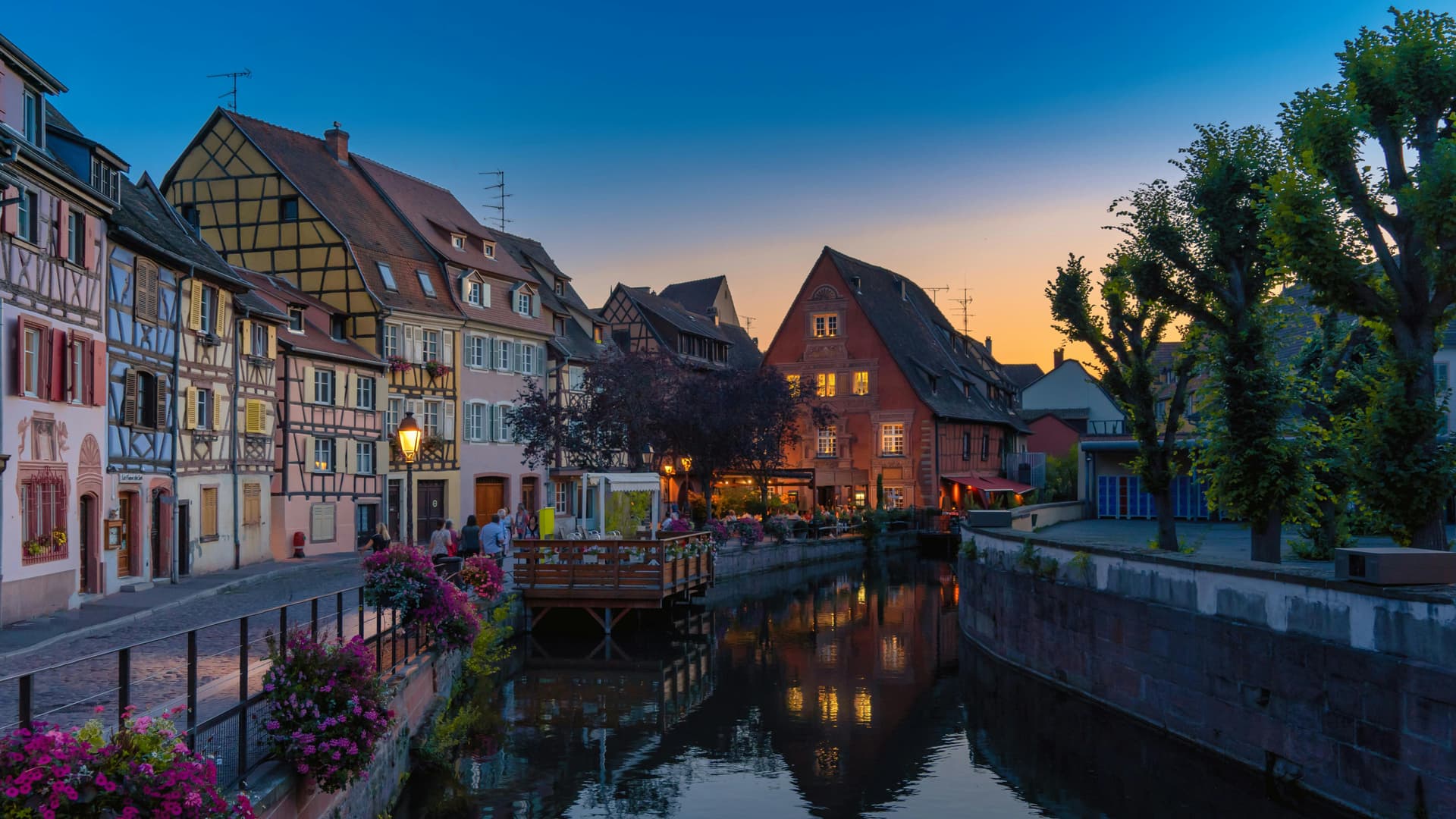
Colmar claims the title of most picturesque Alsatian town, and the competition is fierce. The Little Venice quarter, where colorful houses line a canal, appears on countless postcards and Instagram feeds. Yet even heavy tourism cannot diminish the genuine charm of the old town, especially in early morning or evening light.
The Route des Vins winds through vineyard-covered hills from Marlenheim to Thann. Villages along this route compete in floral displays, their half-timbered houses maintained with obvious pride. Riquewihr, Ribeauvillé, Kaysersberg, and Eguisheim each claim picturesque honors, and visiting several reveals subtle differences in character.
Alsatian wines deserve more international recognition than they receive. The Rieslings here range from bone-dry to lusciously sweet, all with a precision that reflects the region's methodical character. Gewürztraminer, with its exotic aromatics, reaches its finest expression in Alsace. Pinot Gris and Crémant d'Alsace sparkling wine complete a portfolio that pairs perfectly with local cuisine.
The food of Alsace reflects its dual heritage. Choucroute garnie (sauerkraut with sausages), baeckeoffe (a meat and vegetable stew), and tarte flambée (a thin-crust pizza-like specialty) satisfy hearty appetites. The Christmas markets, for which Alsace is justly famous, offer gingerbread, mulled wine, and holiday atmosphere that draws visitors from across Europe.
Christmas in Alsace feels particularly magical. Markets fill the squares of every town, decorated with lights and selling crafts, food, and seasonal treats. Strasbourg bills itself as the Capital of Christmas, and the combination of medieval setting, Germanic traditions, and French flair creates holiday atmosphere that's genuinely transporting.
Experiences We Can Arrange
Quick Facts
Best Time to Visit
Late November to December for Christmas markets. May to October for wine touring. Spring and fall offer beautiful landscapes with fewer visitors.
Recommended Duration
Four to five days covers the highlights. A week allows for deeper exploration of the wine route villages.